Tag: executive

  • Executive Summary on the Ivory Tower Syndrome

    #architecture #clarity #velocity #direction

    This is the executive summary of last week’s post, Oh please, get down from the ivory tower and get something done!
    EA Ivory Tower Syndrome

    When does it happen?

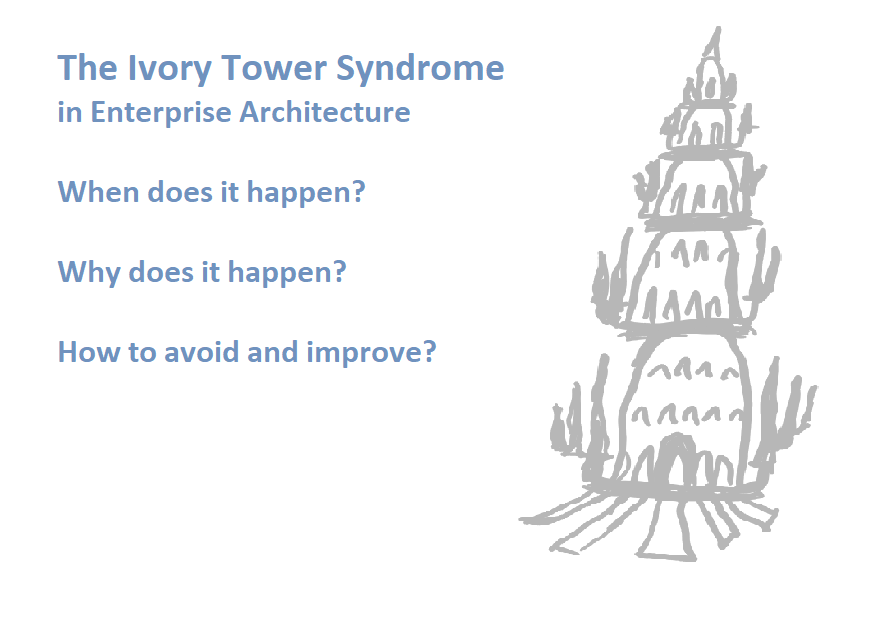
    The Ivory Tower Syndrome describes an often seen drift of EA initiatives dealing mostly with themselves focusing solely on strategic management while already having lost traction and therefore acceptance by the ground force.

    Why does it happen?

    Some EA initiatives tend to focus more on strategic reporting to upper levels and try to govern by code of law only. But, the ground force in terms of actual projects and product development, needs support for their huge amount of concise work that has to be done with granted budget and milestones. In a law-only approach they feel like not being supported but only punished (missing the carrot in “carrot and stick”).

    A common misconception of EA initiatives of companies is that they can work like political government and urban planning. But, as analogy of how e.g. power grids are managed (or water grids, gas grids, metro systems, and so on), companies often only provide a fraction of needed services.

    How to avoid and improve?

    • An adequate EA authority shall be balanced with a compact code of law.
    • The EA authority shall collaborate with other authorities like revision and portfolio manager.
    • Do not be jurisdictional because companies have no jurisdiction compared to politics and urban planning.
    • Align objectives of managers with your EA strategy or vice versa.
    • Implement cost saving services for each of your laws (get the tiger some teeth).
    • Include projects and product development in a community. Communicate outstanding achievements. Recognized employees drive acceptance for you!
  • Executive Summary on EA Maturity

    #architecture #clarity #velocity #direction 

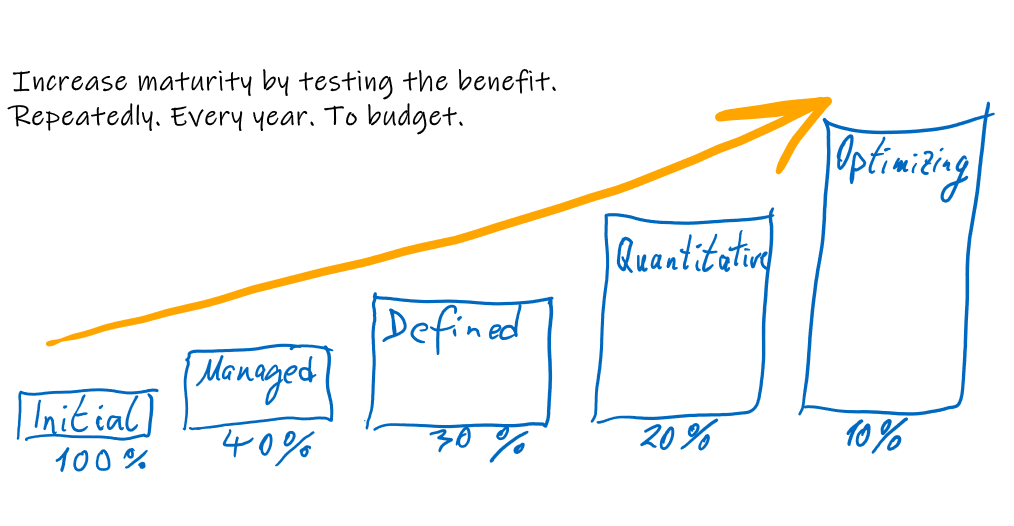
    EA Maturity Model

    Imagine that you as CIO are in need or want to establish or improve Enterprise Architecture in the company.

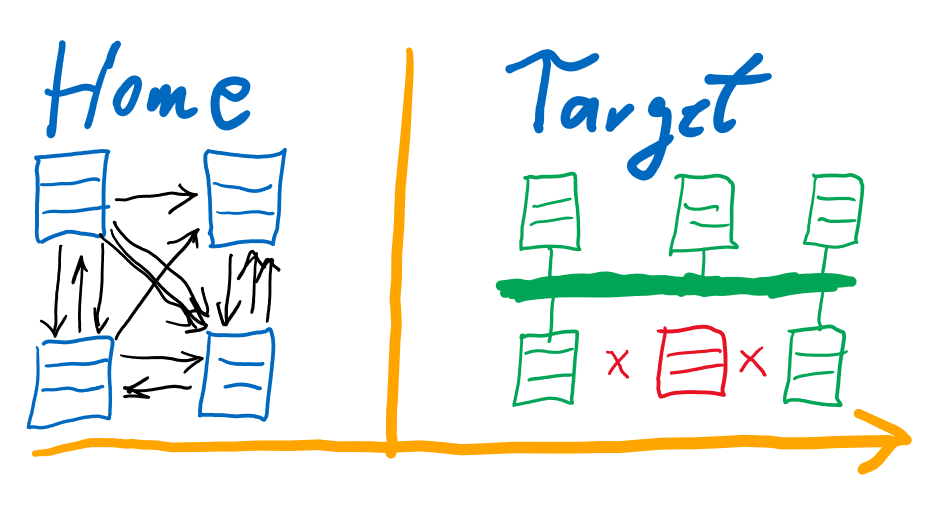
    No matter where you start and go, it’s necessary to know where you start and go – just like in Google Maps routing e.g. from your home to a client. You know exactly where your home is and so does Google Maps. And you had better know where your client is too – again, so does Google Maps. Moreover, you or Google Maps know possible paths from your home to your client. This is the foundation for being able to do the routing.

    Of course, your situation is more complexe since you need to move in time from the present situation to a target situation in the future. On the other hand, it gives you a lot of options. You can construct new efficient paths getting rid of old, slow, costly ones.

    From Home to Target

    So when starting this Enterprise Architecture initiative of yours, you should start building or updating your EA map. In consequence, you capture what you know about your starting point, your strategy, your target, and which paths there are or could be.

    (This summary is an extract of my earlier post Hello Mr EA what you should expect when starting a new project establishing or improving your Enterprise Architecture.
    Both posts together are also a very good example to present an aspect to different stakeholders – CIO expecting decision-oriented information, Head IT Governance or Enterprise Architect zooming in expecting deliverables, methods, and tools)